Ciwa concludes her 35th theology week conference
—March 28, 2026
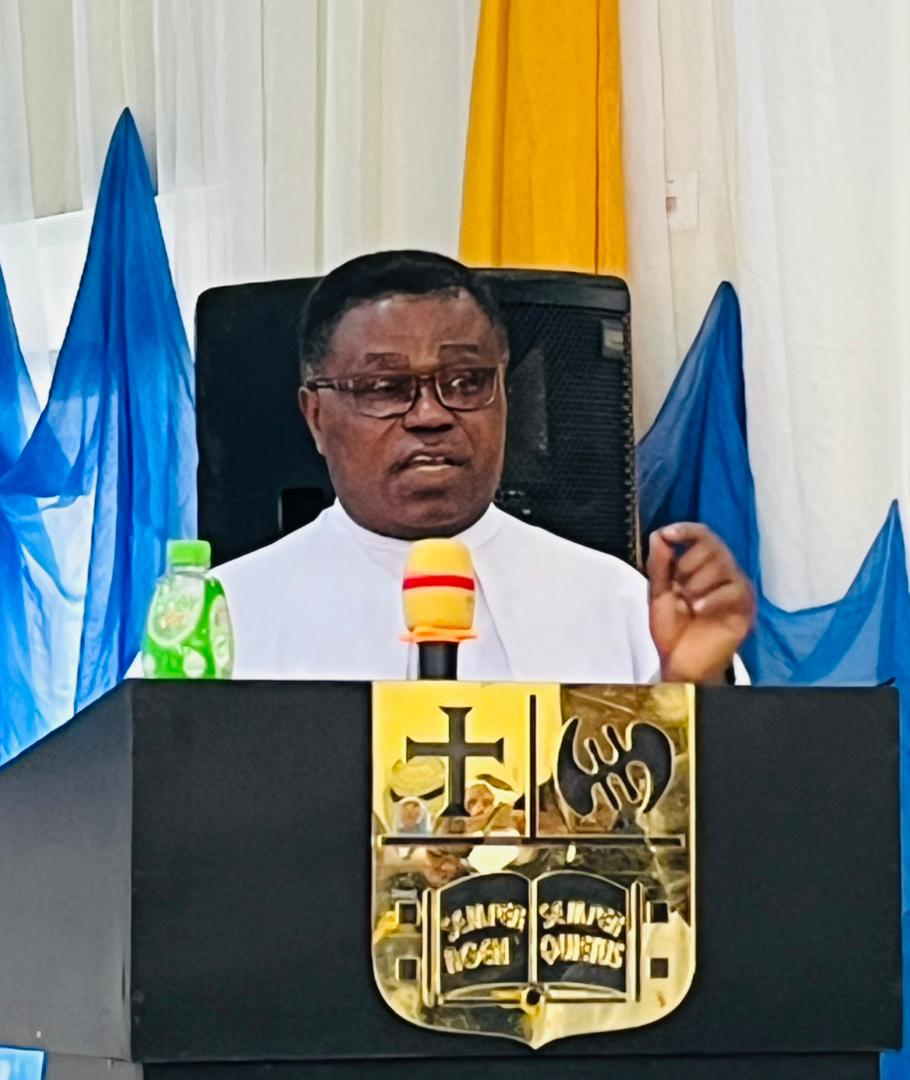
Port Harcourt, Nigeria/March 27, 2026 | Fr. Okhueleigbe Osemhantie Ãmos, PhD
The Catholic Institute of West Africa (CIWA) has concluded her 35th Theology Week Conference after a week marked by rare intellectual depth and remarkable spiritual intensity in Port Harcourt. For five days, the institute became a powerful meeting point of theology, culture, and contemporary African realities, attracting scholars, experts, clergy, religious, and participants from across Nigeria and the wider West African subregion.
Held under the theme “Theology and Human Suffering in Contemporary Africa,” the conference opened not merely as an academic gathering but as a profound moral and theological response to the wounds of the continent. The event also came at a historic moment for the institute, which is steadily advancing toward its transformation into a full-fledged Catholic University of West Africa with both Roman and national recognition, an aspiration that gave the entire week an atmosphere of expectation, confidence, and quiet triumph.
The conference opened on Monday, March 23, 2026, with a solemn Eucharistic celebration presided over by Most Rev. Patrick Eluke, Apostolic Administrator of the Port Harcourt Diocese, acting on behalf of the Bishops of RECOWA–CERAO. The Acting Rector of CIWA, Very Rev. Fr. Prof. Luke Ijezie, followed with an address that was both reflective and forward-looking. In what became one of the most applauded moments of the opening ceremony, he reported the outcome of his recent official visit to Rome and MISSIO Germany. The announcements—renewal of CIWA’s pontifical status, progress toward the Licentiate in Canon Law, recognition as a full-fledged theological institution, and the decision of the Ratzinger Foundation to celebrate its centenary in CIWA next year, were received with prolonged applause that revealed both pride and renewed confidence in the future of the institute.
Our correspondent, Appolonia Budzee, reports that the keynote address by Rev. Fr. Dr. John Odey gave the conference its first major intellectual thrust. In a strongly argued presentation, he traced the roots of suffering in Nigeria to the 1914 amalgamation and called for a courageous national conversation capable of confronting the deeper structural causes of poverty and social dislocation.
“The keynote address gave the conference its first real intellectual momentum. By linking present suffering to structural historical realities, the speaker forced the audience to confront questions that are often avoided in both politics and theology,”
— Appolonia Budzee, Correspondent
The lead paper delivered by Rev. Fr. Dr. Gerald Emem Umoren turned attention to the African worldview. Our correspondent Roselyn Egbuchulem describes the presentation as one of the most culturally grounded contributions of the conference.
“In a rich and layered presentation on African traditional interpretations of pain, misfortune, and the paranormal, the presenter argued that in African thought suffering is never meaningless; it is always situated within a spiritual, moral, and communal framework. By emphasising solidarity, prayer, and moral responsibility, he gave the discussion a distinctly African depth,”
— Roselyn Egbuchulem, Correspondent
As the days progressed, the conference unfolded with remarkable intellectual rhythm. Tuesday’s session featured Sr. Prof. Mary Jerome IHM, who approached human suffering from a biblical perspective. Moving with scholarly precision between the Old and New Testaments, she demonstrated that suffering, though painful, can become a path toward hope, transformation, and spiritual maturity. Her presentation generated one of the most sustained and engaging discussions of the week.
Wednesday’s session deepened the theological conversation further. Rev. Fr. Dr. Samuel Gwimi, Acting Head of the Pastoral Department of CIWA, presented a carefully structured reflection titled “Pastoral Care and Resilience in the Face of Suffering in Sub-Saharan Africa.” According to Victor Yakubu, one of our correspondents, the presentation stood out for its pastoral realism and theological depth.
“The presenter described suffering as an unavoidable human reality expressed in physical, emotional, and spiritual forms, often intensified by poverty, disease, and violent conflict. Drawing from Scripture, the Church Fathers, and papal documents, he called for a pastoral response rooted not in abstract theology but in compassionate presence and renewed evangelisation,”
— Victor Yakubu, Correspondent
The intensity of the discussions that followed revealed how deeply the theme had touched the participants. Questions centred on the limits of human endurance, the theological meaning of prolonged suffering, and the relationship between divine providence and human responsibility. The atmosphere in the hall remained both reflective and intellectually charged.
The final academic sessions on Thursday, March 26, 2026, carried the intellectual momentum to an impressive close. The first paper, presented by Rev. Fr. Dr. Emmanuel Idoko of the Catholic Diocese of Otukpo, examined the phenomenon of digital violence in Africa: cyberbullying, online attacks, and digital fraud. By drawing a powerful parallel between the traditional African village square and today’s virtual space, he showed how moral disorder has migrated from the physical to the digital world with devastating consequences.
The second paper, delivered by Rev. Fr. Dr. Linus Umaru of the University of Jos, addressed theological responses to despair and depression in the contemporary world. The discussion that followed was both lively and reflective, with participants engaging the topic from pastoral, psychological, and theological perspectives.
Beyond the plenary sessions, the conference also witnessed a remarkable outpouring of scholarly contributions in smaller academic groups. Papers explored themes ranging from disability and human dignity to Ubuntu and reconciliation, artificial intelligence and compassion, biblical reflections on suffering, Catholic education and the poor, climate injustice, ecotheology, and the role of the Church as a moral communicator in contexts of injustice. The breadth of topics reflected not only the seriousness of the conference but also the growing maturity of theological scholarship in Africa.
The 35th Theology Week reached its solemn conclusion on Friday, March 27, 2026, with the closing Mass presided over by the Acting Rector, Prof. Luke E. Ijezie, followed by the reading of the conference communiqué and a vibrant cultural celebration that brought together theology, faith, and African identity in a remarkable synthesis.
After thirty-five consecutive years, CIWA’s Theology Week continues to stand as one of the most influential theological gatherings in West Africa. This year’s edition, devoted to the theme of human suffering, has not only deepened theological reflection but has also challenged participants to translate theology into concrete action in a continent where suffering remains painfully visible, yet hope continues to endure.
Rev. Fr. Dr.Okhueleigbe Osemhantie Amos
Port Harcourt, Nigeria – March 27, 2026
Related News
June, 19 2026
A historic visit: ciwa rolls out the red carpet for chancellor bishop alexis touabli youlo
A historic visit: ciwa rolls out the red carpet for chancellor bishop alexis touabli youlo
May, 18 2026
Ciwa celebrates 2026 comweek and 60th world day of social communications with grand festivities
Ciwa celebrates 2026 comweek and 60th world day of social communications with grand festivities
May, 04 2026
Ciwa honours very revd fr. prof. peter damian akpunonu at 60 years of priesthood
Ciwa honours very revd fr. prof. peter damian akpunonu at 60 years of priesthood
March, 28 2026
Ciwa concludes her 35th theology week conference
Ciwa concludes her 35th theology week conference
March, 25 2026
Bishop Eluke Declares 35th CIWA Theology Week Conference Open
Bishop Eluke Declares 35th CIWA Theology Week Conference Open