History & Background
The Catholic Institute of West Africa (CIWA) is a higher Ecclesiastical Institute of the Catholic Church in the West African Sub-region. It was founded in 1981 by the then Association of Episcopal Conference of Anglophone West Africa (AECAWA) for the study of theology and related disciplines in the socio-cultural context of West Africa. The Institute took off on the 8th of December 1981 at Ozuoba in Port Harcourt, Nigeria, in a house formerly used by Jesuit Fathers as a retreat centre. Its present proprietor is the Regional Episcopal Conference of West Africa (RECOWA/CERAO).
CIWA started with eight students as well as eight academic and administrative staff, with the late Monsignor Stephen Ezeanya, who later became the Archbishop of Onitsha, as Rector. A year later, the Institute moved to its present site, a former minor seminary, as an interim solution to an acute accommodation problem. Presently, the Institute has a second campus in Obehie (near Aba), Abia State, which accommodates all undergraduate programmes, all of CIWA's first cycle of postgraduate programmes, and the PhD programme in Communication Studies.
The Institute took back possession of its Obehie campus in September 2014 after Veritas University, which had used it temporarily as a take-off campus relocated to its permanent site in Abuja. The CIWA Obehie campus equally contains an expansive staff quarters where most senior academic and administrative staff reside
and which also houses a hostel for female religious students of the
Institute.
FOREMOST INSTITUTE OF PONTIFICAL RIGHT IN AFRICA
In May 1994, the Catholic Institute of West Africa was approved and canonically erected by the Holy See for the award of master’s degree in theology (Licentia Canonica) as well as diplomas and certificates in theology and related disciplines. CIWA therefore has a pride of place as a foremost institute of pontifical right in Africa.
Earlier in 1987, the Institute had been recognized by the Federal Government of Nigeria, following which the University of Calabar was mandated, through the National Universities Commission (NUC) to affiliate the academic programmes of the Institute. With the affiliation, CIWA thenceforth awards, in addition to the canonical degrees, the following secular degrees: Bachelor of Religious Studies (B. Res), Bachelor of Arts in Communication Studies (BA), Master of Theology (M.Th.), Master of Arts in Pastoral Communication (MA), PhD in Theology, and PhD in Pastoral Communication. In effect, students of theology at CIWA can take either the M.Th. or the STL or both.
VISION, MISSION AND GUIDING PRINCIPLE OF CIWA
The overall vision, mission and guiding principles of the Catholic Institute of West Africa as an educational institution are encapsulated in the words of St. Augustine, a co-patron of the Institute (St. Thomas Aquinas is the other patron), which the Institute has adopted as a motto, namely: Semper Agents, Semper Quietus. This is a synthesis of action and contemplation, of study and prayer as a general landmark of intellectual work and scholarship in a Christian context.
The activities of the Institute are therefore fashioned to project in contextual systematic discourses, essential values of variant cultures and traditions of the West African sub-region. This is with a view to enhancing a better understanding and commitment of the Christian faith within the various socio-cultural contexts. Deep-rooted academic engagements; such activities as Community Mass, Annual Theology Week Conference, Foundation Day & Patrons Day Celebrations, including other culturally-oriented institutional activities are avenues through which the Institute puts the phenomenon of contextualization and enculturation into practice.
OBJECTIVES OF THE INSTITUTE
In line with its vision and mission and in accordance with CIWA Statutes, the Institute has the following as its main objectives:
· to promote scientific, analytical and critical study of theology and related disciplines,
· to train Church personnel in Christian theology studied against the socio-cultural background of Africa,
· to train Church personnel in the communication of Christian theology, using modern and contemporary communication technologies,
· to produce teachers for seminaries and other higher institutions of learning.
ACADEMIC PROGRAMMES
CIWA has three faculties currently–Faculty of Theology, Faculty of Canon Law, and Faculty of Arts and Social Sciences. These faculties have eleven academic programmes, namely, Biblical Theology, Dogmatic Theology, Moral Theology, Pastoral Theology, Spiritual Theology, Sacred Liturgy, Canon Law, Religious Studies, Philosophy, and Pastoral/Communication Studies. In addition, a Centre for the Study of African Culture and Communication (CESACC) was established in the 2003/2004 academic year. The Centre runs programmes at the first and second cycle levels (diploma, bachelor’s, postgraduate diploma, master’s and doctorate degree programmes in Pastoral/Communication Studies).
CIWA also runs the following units: Unit of Ethics and Social Teaching of the Church (in the Faculty of Theology) as well as Unit of Marriage and Family Life and Unit of Formation for Formators (in the Faculty of Canon Law). At the undergraduate level, the Institute also runs sub-degree diploma and certificate programmes in Theology and Philosophy. At this level, it equally has outreach programmes, through affiliation with some catechetical centres located in different parts of Nigeria. Through these outreach programmes, CIWA reaches a considerable number of lay Christians.
STAFF STRENGTH AND DEVELOPMENT
Whereas at inception, CIWA had only eight academic and administrative staff, presently, the Institute has more than thirty academic staff with fifty senior/intermediate/junior staff. This shows a staff growth rate of great proportion.
We recognize the contributions of the following Rectors of the Institute:
Archbishop Stephen Ezeanya (Late): 1981 - 1985
Cyriacus Mba (Late): 1985 - 1989
Very Rev. Fr. Prof. Peter Damian Akpunonu: 1989 - 1997
Very Rev. Fr. Dr. James Moti (Late): 1997 - 2006
Very Rev. Msgr. Prof. Felix Adeigbo (Late): 2006 - 2014
Rt. Rev. Msgr. Prof. Sylvanus Iniobong Udoidem: 2016 - 2019
Very Rev. Fr. Prof. Jude Abidemi Asanbe: 2019 - 2025
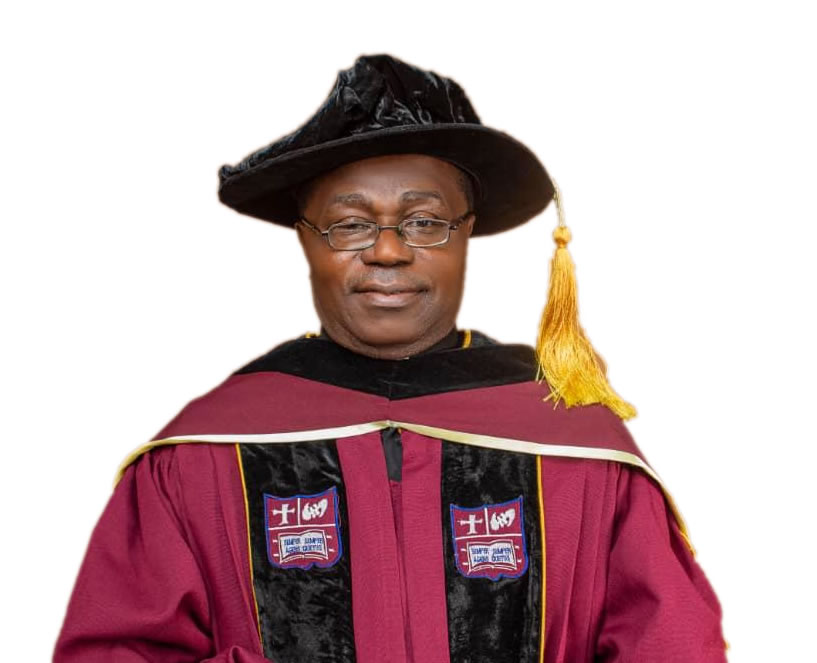
Very Rev. Fr. Prof. Luke Emehiele Ijezie: 2025 till date
These people made and have continued (in the case of the current Rector) to make their impacts felt in the Institute during their respective tenures. Equally, some staff who have left the services of the Institute for higher responsibilities or due to the demands from their dioceses and/or religious congregations have been all parts of the success story of the Institute. The Institute encourages hard work by absorbing brilliant students as academic staff from where they fully develop their potentials. It appreciates deeply the unquantifiable contributions of the current Rector, Very Rev. Fr. Prof. Luke Emefiele Ijezie. He is a veteran member of CIWA academic and administrative staff.
GROWTH IN STUDENTS AND ENROLMENT
The strength of the Institute is particularly hinged on the growing students’ enrolment over the years. With only eight students at inception, the Institute gradually and steadily recorded impressive increase in the number of candidates admitted for the academic programmes. Among numerous distinguished graduates of CIWA are a cardinal, bishops, rectors of seminaries, diocesan chancellors, university lecturers, and a host of other functionaries in responsible positions in Church and society.
The current Rector, Very Rev. Fr. Prof. Luke Emehiele Ijezie, is a worthy and accomplished scholar of this great Institute. CIWA’s tremendous growth as well as its commitment to training ecclesiastical and secular leaders is good for West Africa. It is indeed good for the Church.
These people made and have continued (in the case of the current Rector) to make their impacts felt in the Institute during their respective tenures. Equally, some staff who have left the services of the Institute for higher responsibilities or due to the demands from their dioceses and/or religious congregations have been all parts of the success story of the Institute. The Institute encourages hard work by absorbing brilliant students as academic staff from where they fully develop their potentials. It appreciates deeply the unquantifiable contributions of the current Rector, Very Rev. Fr. Prof. Luke Emefiele Ijezie. He is a veteran member of CIWA academic and administrative staff.
GROWTH IN STUDENTS AND ENROLMENT
The strength of the Institute is particularly hinged on the growing students’ enrolment over the years. With only eight students at inception, the Institute gradually and steadily recorded impressive increase in the number of candidates admitted for the academic programmes. Among numerous distinguished graduates of CIWA are a cardinal, bishops, rectors of seminaries, diocesan chancellors, university lecturers, and a host of other functionaries in responsible positions in Church and society.
The current Rector, Very Rev. Fr. Prof. Luke Emehiele Ijezie, is a worthy and accomplished scholar of this great Institute. CIWA’s tremendous growth as well as its commitment to training ecclesiastical and secular leaders is good for West Africa. It is indeed good for the Church.
— Rector